News ·
NASA MUREP funds CubeSat curriculum at Space Lab.
Texas State University Space Lab’s proposal STEM Diversity through CubeSat Technology has been selected for the NASA MUREP MPLAN program to build a hands-on CubeSat workshop curriculum aimed at broadening participation in space-technology training.
The award, made under NASA’s Minority University Research and Education Project (MUREP) MPLAN call, funds a one-year effort starting September 2025. The work is led by Dr. Blagoy Rangelov as Principal Investigator and Evan Jellison as Co-Investigator.
What the program builds
The funded work establishes a structured, six-workshop CubeSat curriculum at the Space Lab and the university’s Advanced Prototyping Laboratory. The format is project-based and hands-on rather than lecture-driven, and is targeted at students who are historically underrepresented in aerospace, including first-generation college students and the Hispanic-majority student population that defines TXST as a Hispanic-Serving Institution.
Each workshop is a 3-hour session covering one slice of CubeSat development:
- Intro to satellite systems
- Experiment design and systems engineering
- Space-flight physics
- Basics of electronics
- Programming and controllers
- Remote sensing and instrumentation
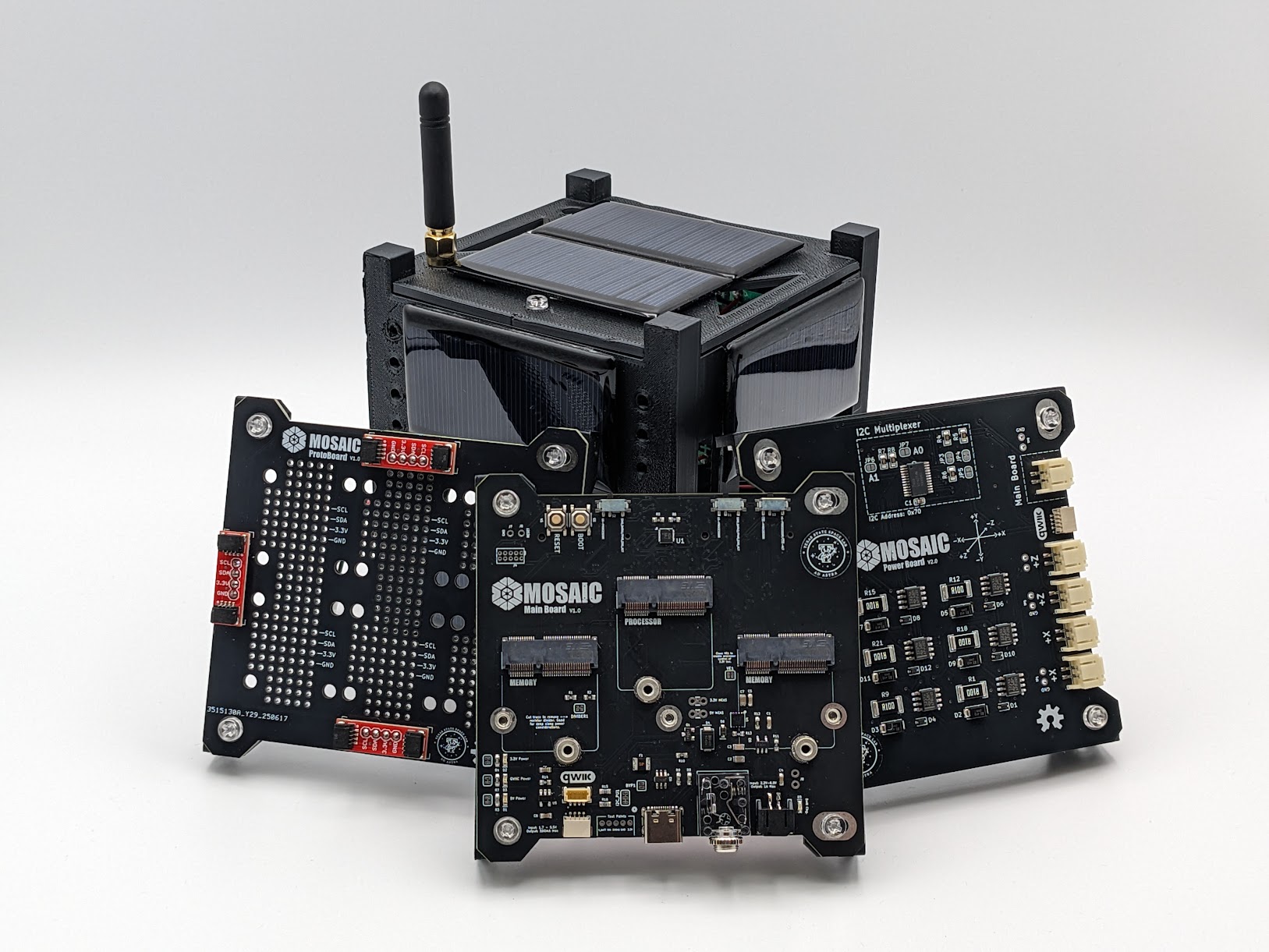
The sequence ends with a practical phase where students design, integrate, and test their own CubeSat projects on the lab’s MOSAIC training hardware.
Why it matters for the lab
Until now, Space Lab’s educational throughput has been ad-hoc — students plug into mission work at whatever skill level they bring. This award funds the missing piece: a structured on-ramp that gets a new student from zero to mission-relevant in a single semester. The curriculum is designed to be reusable and to integrate into existing Physics, Computer Science, and Engineering courses.